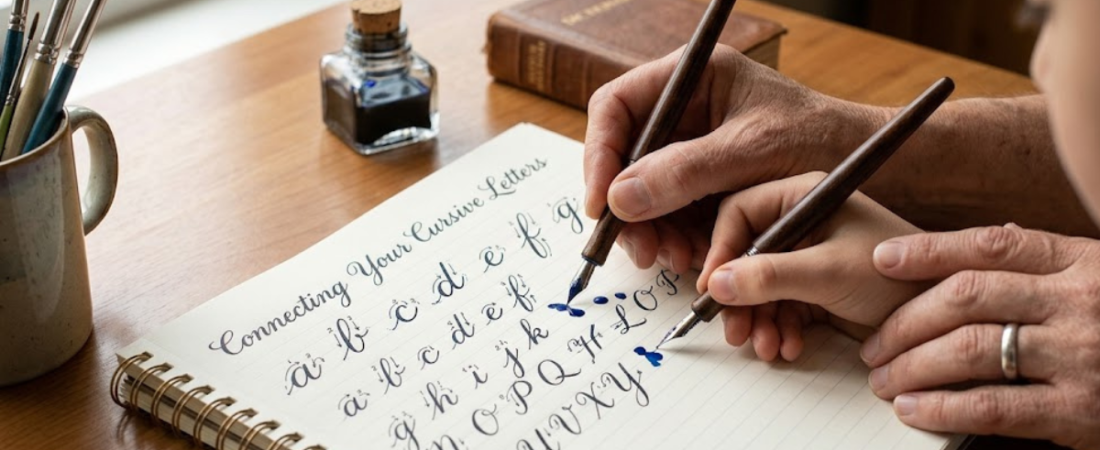
In a world filled with keyboards and touchscreens, cursive writing still has a timeless charm. From elegant signatures to smoother handwriting, learning how to write in cursive can improve writing speed, hand coordination, and personal style. Many people want to master cursive for school, journaling, art, or simply because it looks beautiful on paper.
The good news is that cursive handwriting is easier to learn than most beginners expect. With the right techniques, regular practice, and a little patience, anyone can develop neat and flowing cursive skills.
What Is Cursive Writing?
Cursive writing is a style of handwriting where letters are connected in a flowing motion. Unlike print writing, cursive reduces the need to lift the pen from the paper, making writing smoother and often faster.
This writing style has been taught for generations because it helps improve:
- Fine motor skills
- Hand-eye coordination
- Writing rhythm
- Signature development
- Memory retention during learning
Today, many students and adults still choose to learn cursive for practical and creative reasons.
Why Learning Cursive Still Matters
Even in the digital age, cursive remains useful in everyday life. Signatures, handwritten notes, invitations, and personal journals often look more polished in cursive.
Some studies also suggest that handwriting activates areas of the brain connected to learning and memory. That’s one reason schools continue teaching cursive in many places around the world.
How to Write in Cursive for Beginners
If you are just starting out, the key is to focus on simple movements before trying complex words or sentences.
Start With Basic Strokes
Before practicing full letters, learn the common strokes used in cursive:
- Upward curves
- Downward loops
- Oval shapes
- Connecting lines
These patterns form the foundation of most cursive letters.
Practice Lowercase Letters First
Lowercase letters are usually easier because they use simpler connections and smaller movements.
Begin with easy letters such as:
- a
- c
- e
- i
- l
- o
- u
Once these feel comfortable, move on to more advanced shapes.
How to Write in Cursive Alphabet
The best approach is to practice the alphabet in groups based on similar shapes.
Letters With Oval Shapes
These include:
- a
- d
- g
- o
- q
Letters With Tall Loops
Examples include:
- b
- f
- h
- k
- l
Letters With Descending Loops
These letters extend below the writing line:
- g
- j
- p
- y
- z
Grouping letters this way makes learning feel less overwhelming.
How to Write in Cursive Step by Step
Here’s a simple method beginners can follow daily.
Step 1: Choose the Right Tools
Use:
- A smooth pen or pencil
- Lined paper
- Practice sheets
- A comfortable writing position
Good tools make practice easier and reduce hand strain.
Step 2: Learn Letter Connections
Cursive depends on smooth transitions between letters. Practice connecting two-letter combinations such as:
- ab
- er
- li
- ou
Once you understand transitions, full words become much easier.
Step 3: Write Short Words
Start with simple words like:
- cat
- love
- home
- smile
Focus more on consistency than speed.
Step 4: Practice Full Sentences
After learning individual words, move to complete sentences. This helps develop rhythm and natural flow.
How to Write in Cursive Handwriting Neatly
Neat cursive is all about consistency. You don’t need perfect artistic handwriting to make it look attractive.
Keep these tips in mind:
- Maintain equal letter spacing
- Keep slant angles consistent
- Avoid pressing too hard
- Write slowly at first
- Practice daily for short periods
Many beginners improve dramatically after just a few weeks of regular practice.
How to Write in Cursive for Kids
Children often learn faster when practice feels fun instead of stressful.
Helpful strategies include:
- Tracing dotted letters
- Using colorful worksheets
- Practicing one letter per day
- Writing favorite words
- Rewarding progress
Short sessions usually work better than long practice periods.
How to Write in Cursive for Adults
Adults sometimes feel intimidated about starting cursive later in life, but the learning process is actually very manageable.
Adult learners benefit from:
- Slower, focused repetition
- Daily handwriting exercises
- Journaling practice
- Copying short quotes
- Practicing signatures
With patience, adults can develop elegant cursive handwriting surprisingly quickly.
How to Write in Cursive Lowercase Letters
Lowercase letters are the foundation of fluent cursive writing. Most words are built primarily from lowercase forms, so mastering them first is important.
Pay attention to:
- Smooth entry strokes
- Rounded loops
- Consistent height
- Natural connecting lines
Once lowercase letters become automatic, uppercase letters feel much easier.
Using Worksheets and Practice Tools
Practice sheets are one of the most effective learning methods because they guide hand movement and spacing.
Good worksheets often include:
- Tracing exercises
- Letter repetition
- Word-building drills
- Sentence practice
- Connection exercises
Digital tools and handwriting apps can also help reinforce muscle memory.
How to Write in Cursive in Word
Many people search for ways to create cursive-style text digitally. Word processors allow you to use cursive fonts that mimic handwriting styles.
Popular cursive font styles include:
- Script fonts
- Calligraphy fonts
- Handwriting fonts
These are useful for invitations, projects, and decorative writing, although typing cursive is different from handwriting it manually.
Common Mistakes Beginners Make
Almost everyone struggles with a few issues at first.
Common mistakes include:
- Writing too fast
- Inconsistent letter sizes
- Skipping connection strokes
- Pressing too hard on the paper
- Practicing without guidelines
The solution is simple: slow down and focus on accuracy before speed.
Frequently Asked Questions
How long does it take to learn cursive?
Most beginners can learn basic cursive within a few weeks of consistent practice.
Is cursive harder than print writing?
At first it may feel unfamiliar, but many people eventually find cursive smoother and faster.
Can adults still learn cursive easily?
Yes. Adults often learn quickly because they already understand letter structure and writing control.
What is the easiest way to practice cursive?
Daily repetition using worksheets and short writing exercises works best.
Should kids learn cursive?
Many educators believe cursive improves coordination, reading skills, and writing fluency.
Do schools still teach cursive?
Some schools continue teaching cursive, while others focus more on typing and digital writing.
What tools are best for cursive practice?
Smooth pens, lined paper, and beginner-friendly worksheets are ideal for practice.
Conclusion
Learning how to write in cursive is a rewarding skill that combines creativity, coordination, and personal expression. Whether you are a student, parent, or adult learner, cursive writing can improve handwriting quality and make everyday writing feel more natural and elegant.
The key is to start simple, practice regularly, and focus on steady improvement instead of perfection. With time and repetition, cursive becomes smoother, faster, and more enjoyable. Keep practicing the alphabet, letter connections, and short sentences, and you’ll soon develop a handwriting style that feels uniquely your own.