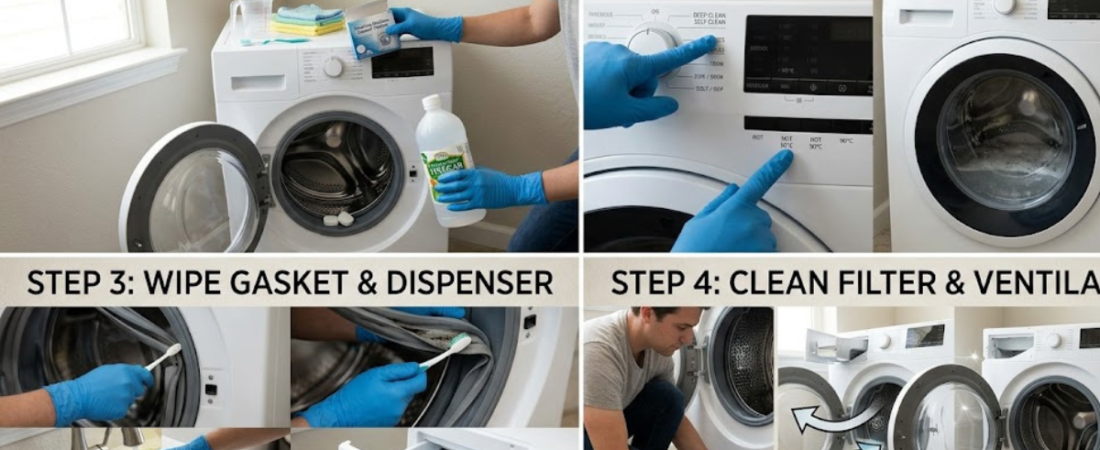
If your freshly washed clothes don’t smell as clean as they should, your washing machine may be the culprit. Over time, detergent residue, fabric softener, dirt, mold, and mineral deposits can build up inside the machine, affecting both performance and cleanliness.
Learning how to clean a washing machine is one of the simplest ways to improve laundry results, eliminate odors, and extend the life of your appliance. Whether you own a front loader, top loader, or high-efficiency model, this guide covers everything you need to know.
Why Cleaning Your Washing Machine Matters
Many people assume that because a washing machine constantly uses soap and water, it cleans itself. In reality, moisture and residue create the perfect environment for bacteria, mildew, and mold.
Regular cleaning helps:
- Eliminate unpleasant odors
- Improve washing performance
- Prevent mold growth
- Extend appliance lifespan
- Reduce detergent buildup
- Keep clothes smelling fresh
Signs Your Washing Machine Needs Cleaning
Before learning how to clean washing machine drum components and other parts, watch for these common warning signs:
- Musty or sour smells
- Visible mold around the door seal
- Detergent residue buildup
- Clothes not smelling fresh
- Slow drainage
- Black spots on rubber components
If you notice any of these issues, it’s time for a deep clean.
How to Clean a Washing Machine With Vinegar
One of the most popular methods is learning how to clean washing machine with vinegar.
White vinegar helps dissolve mineral deposits, soap scum, and odor-causing bacteria.
Steps
- Empty the washing machine completely.
- Add 2 cups of white vinegar to the drum.
- Run the hottest and longest cycle available.
- Allow the cycle to finish.
- Wipe the drum and interior surfaces with a microfiber cloth.
This method works well for routine maintenance.
How to Clean a Washing Machine With Vinegar and Baking Soda
Many homeowners prefer how to clean washing machine with vinegar and baking soda because the combination helps remove stubborn buildup.
Steps
- Pour 2 cups of white vinegar into the drum.
- Run a hot wash cycle.
- Add ½ cup of baking soda directly into the drum.
- Run another hot cycle.
- Wipe all interior surfaces clean.
This process helps neutralize odors and remove residue.
How to Clean a Washing Machine With Baking Soda
If you’re looking for a gentler option, learning how to clean washing machine with baking soda is a great choice.
Steps
- Add ½ cup baking soda directly to the drum.
- Run a hot water cycle.
- Wipe down all interior surfaces afterward.
Baking soda naturally deodorizes and helps remove light buildup.
How to Clean a Washing Machine With Bleach
For severe mold or mildew issues, you may need to know how to clean washing machine with bleach.
Steps
- Add ½ cup bleach to the detergent dispenser.
- Run a hot wash cycle.
- Run an additional rinse cycle.
- Leave the door open to dry.
Never mix bleach with vinegar, as doing so creates harmful fumes.
How to Clean a Washing Machine Top Loader
Knowing how to clean washing machine top loader models requires a slightly different approach.
Cleaning a Top-Loading Washer
- Fill the machine with hot water.
- Add vinegar or a washing machine cleaner.
- Let the machine agitate for several minutes.
- Pause the cycle and allow the solution to sit for one hour.
- Resume and complete the cycle.
- Wipe the lid and exterior surfaces.
This process works for most major brands.
How to Clean Washing Machine Top Loader Samsung
For Samsung top-load washers:
- Use the Self Clean cycle if available.
- Follow manufacturer recommendations.
- Clean detergent dispensers monthly.
- Leave the lid open after use.
How to Clean a Washing Machine Front Loader
Learning how to clean washing machine front loader units is especially important because moisture often becomes trapped inside.
Front Loader Cleaning Steps
- Remove debris from the rubber gasket.
- Clean the detergent drawer.
- Run a hot cleaning cycle with vinegar or machine cleaner.
- Dry the door seal thoroughly.
- Leave the door slightly open after every wash.
Front-load machines are particularly susceptible to mold growth around the seal.
How to Clean Washing Machine Rubber Seal
The rubber gasket is one of the dirtiest areas in many washers.
Steps
- Pull back the seal carefully.
- Remove trapped debris.
- Spray with vinegar or a mild cleaning solution.
- Scrub using a soft brush.
- Wipe completely dry.
Regular cleaning prevents mold and mildew buildup.
How to Clean Washing Machine Gasket
If you’re researching how to clean washing machine gasket, the process is similar to cleaning the rubber seal.
Pay special attention to:
- Hidden folds
- Moisture pockets
- Mold spots
- Soap residue
Drying the gasket after each load significantly reduces future buildup.
How to Clean Washing Machine Filter
Many washing machines include a removable filter that traps lint and debris.
Steps
- Locate the filter using your owner’s manual.
- Place a towel underneath.
- Remove the filter carefully.
- Rinse under warm water.
- Remove lint and debris.
- Reinstall securely.
How to Clean Washing Machine Filter Top Loader
Some top loaders have filters inside the agitator or near the tub.
Inspect and clean these filters every few months for optimal performance.
How to Clean Washing Machine Drum
The drum is where detergent buildup commonly accumulates.
Steps
- Run a hot cleaning cycle.
- Use vinegar, baking soda, or a washing machine cleaner.
- Wipe the drum thoroughly after cleaning.
- Leave the door open to air dry.
Regular drum maintenance helps eliminate odors.
How to Clean Washing Machine Tub
The washing machine tub benefits from periodic deep cleaning.
For best results:
- Run an empty hot cycle monthly.
- Use a machine cleaner or vinegar.
- Inspect for residue and buildup.
How to Clean Washing Machine Drain
A clogged drain can lead to standing water and unpleasant smells.
Cleaning the Drain
- Unplug the washer.
- Locate the drain filter.
- Remove debris.
- Flush with warm water.
- Reassemble the components.
How to Clean Washing Machine Drain Pipe
Knowing how to clean washing machine drain pipe can help prevent backups.
Steps
- Pour hot water down the drain.
- Use a plumbing-safe drain cleaner if necessary.
- Check for lint buildup.
- Inspect for blockages regularly.
How to Clean Washing Machine Drain Hose Without Removing It
If you need to know how to clean washing machine drain hose without removing it, try this method:
- Run a hot cycle with vinegar.
- Flush the hose using hot water.
- Inspect for slow drainage.
- Repeat if necessary.
This helps loosen minor buildup without disassembly.
How to Clean Washing Machine Agitator
The agitator can collect detergent residue and grime.
Steps
- Remove the agitator cap if possible.
- Clean with warm water and vinegar.
- Scrub hidden areas.
- Rinse thoroughly.
How to Eliminate Washing Machine Smells
Many searches focus on how to clean washing machine smell problems.
Odor Prevention Tips
- Leave the door open after washing.
- Clean the gasket weekly.
- Use the correct amount of detergent.
- Run monthly cleaning cycles.
- Remove wet laundry promptly.
These habits dramatically reduce odor issues.
Best Washing Machine Maintenance Tips
Keep your washer performing like new with these simple habits:
- Clean monthly
- Inspect hoses regularly
- Wipe seals after use
- Use high-efficiency detergent when required
- Avoid overloading
- Keep dispensers clean
Preventive maintenance is easier than dealing with major repairs later.
FAQs
How often should I clean my washing machine?
Most manufacturers recommend cleaning your washing machine once a month.
Is vinegar safe for washing machines?
Yes, white vinegar is generally safe for routine cleaning when used properly.
Can I use baking soda and vinegar together?
Yes, but many experts recommend using them in separate cleaning cycles for maximum effectiveness.
Why does my washing machine smell bad?
Odors are typically caused by mold, mildew, detergent residue, or standing water.
Should I use bleach or vinegar?
Vinegar is ideal for routine maintenance, while bleach is often better for severe mold issues.
How do I keep mold from returning?
Leave the door open after each load, clean the gasket regularly, and perform monthly maintenance washes.
Conclusion
Learning how to clean a washing-machine is an essential part of home maintenance that many people overlook. From understanding how to clean washing mashine with vinegar to maintaining filters, seals, drains, and drums, a little routine care can dramatically improve performance and freshness.
By following the steps in this guide, you’ll remove buildup, eliminate odors, and help your washer operate more efficiently for years to come. For even better appliance care, consider exploring guides on dryer maintenance, laundry room cleaning, and appliance troubleshooting.