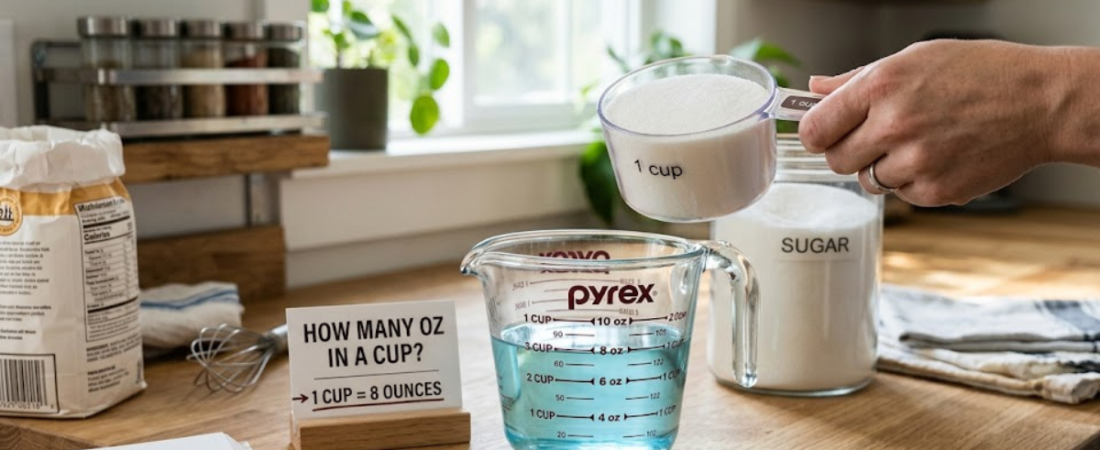
Cooking and baking become much easier once you understand basic kitchen measurements. One of the most common recipe questions involves converting cups into ounces because recipes often switch between the two without much explanation.
Whether you are measuring water, flour, sugar, butter, or coffee, understanding the difference between fluid ounces and dry ounces is important for accurate results. Even small measuring mistakes can affect texture, flavor, and consistency.
This guide breaks down cup-to-ounce conversions in a simple and practical way.
The Standard Cup-to-Ounce Conversion
In the United States, the standard liquid conversion is:
1 cup=8 fluid ounces1\ \text{cup}=8\ \text{fluid ounces}
So, one standard U.S. cup equals 8 fluid ounces for liquids.
However, dry ingredients do not always follow the same rule because different foods have different densities.
Liquid Measurements Explained
Liquid ingredients are the easiest to measure because they follow a consistent volume system.
Common liquids include:
- Water
- Milk
- Coffee
- Oil
- Broth
For these ingredients:
- 1 cup = 8 fluid ounces
- 2 cups = 16 fluid ounces
- Half a cup = 4 fluid ounces
Liquid measuring cups are designed specifically for these conversions.
Dry Ingredients Work Differently
Dry ingredients are measured by weight, not just volume. That means a cup of flour weighs differently than a cup of sugar or cheese.
Examples include:
- Flour
- Rice
- Chocolate chips
- Peanut butter
- Cheese
Because each ingredient has a different density, the ounce weight changes from one food to another.
Fluid Ounces vs Dry Ounces
This is where many people get confused.
Fluid Ounces
Fluid ounces measure volume.
Used for:
- Water
- Milk
- Juice
- Coffee
Dry Ounces
Dry ounces measure weight.
Used for:
- Flour
- Sugar
- Cheese
- Meat
Even though both use the word “ounces,” they measure completely different things.
Common Ingredient Conversions
Water
Water follows the standard liquid rule:
- 1 cup water = 8 fluid ounces
Coffee
A measuring cup equals 8 ounces, but many coffee makers define one “cup” as only 5–6 ounces. That’s why coffee servings sometimes seem smaller.
Milk
Milk also follows standard liquid measurements:
- 1 cup milk = 8 fluid ounces
Flour
All-purpose flour is much lighter than water by weight.
Approximate conversion:
- 1 cup flour ≈ 4.25 ounces
The scooping method can slightly change the weight.
Sugar
Granulated sugar typically weighs:
- 1 cup sugar ≈ 7 ounces
Brown sugar may weigh more because it packs tightly.
Butter
Butter measurements are common in baking recipes.
Standard conversion:
- 1 cup butter = 8 ounces
- 2 sticks butter = 1 cup
Cheese
Cheese weight varies depending on whether it is shredded, grated, or cubed.
General estimate:
- 1 cup shredded cheese ≈ 4 ounces
Sour Cream
Because sour cream behaves like a semi-liquid ingredient:
- 1 cup sour cream ≈ 8 ounces
Cream Cheese
Cream cheese is dense but still commonly measured this way:
- 1cup cream cheese ≈ 8 ounces
Rice
Uncooked rice varies slightly by type.
Typical range:
- 1cup uncooked rice ≈ 6–7 ounces
Peanut Butter
Peanut butter is heavy and dense.
Approximate weight:
- 1cup-peanut butter ≈ 9 ounces
Chocolate Chips
Chocolate chips are frequently used in baking.
Typical measurement:
- 1cup chocolate chips ≈ 6 ounces
Ground Beef
Raw ground beef usually weighs:
- 1cup ground beef ≈ 8 ounces
Fat percentage can slightly affect the exact weight.
Converting Multiple Cups
Here are a few quick reference conversions:
| Cups | Fluid Ounces |
| 1/2 cup | 4 oz |
| 1 cup | 8 oz |
| 1 1/2 cups | 12 oz |
Tips for Accurate Measuring
Use Proper Measuring Tools
- Liquid measuring cups for liquids
- Dry measuring cups for solids
Level Dry Ingredients
Use a flat edge or knife to level flour and sugar.
Avoid Packing Ingredients
Unless a recipe specifically says “packed,” avoid pressing ingredients down.
Use a Kitchen Scale
For baking, a kitchen scale provides the most accurate measurements.
Common Kitchen Mistakes
Confusing Weight With Volume
Cups measure volume, while ounces may measure either volume or weight depending on the ingredient.
Using Liquid Cups for Dry Ingredients
Liquid cups are not ideal for flour or sugar measurements.
Overpacking Flour
Packed flour can make baked goods dense and dry.
Frequently Asked Questions
How many ounces are in one cup?
One U.S. liquid cup contains 8 fluid ounces.
Are fluid ounces and dry ounces the same?
No. Fluid ounces measure volume, while dry ounces measure weight.
How many ounces are in 2 cups?
Two cups equal 16 fluid ounces.
Does flour weigh the same as water?
No. Flour is much lighter than water by volume.
Why do coffee makers use smaller cup sizes?
Some coffee machines define a cup as 5–6 ounces instead of the standard 8-ounce measurement.
What is the best way to measure ingredients accurately?
A kitchen scale gives the most consistent and reliable results.
Conclusion
Understanding cup-to-ounce conversions is one of the most useful kitchen skills for cooking and baking. Liquids usually follow the simple 8-ounce rule, while dry ingredients vary based on density and weight.
Once you understand the difference between fluid ounces and dry ounces, recipe measurements become much easier to follow. Whether you are measuring flour, butter, sugar, water, or chocolate chips, accurate conversions help create better results every time.